
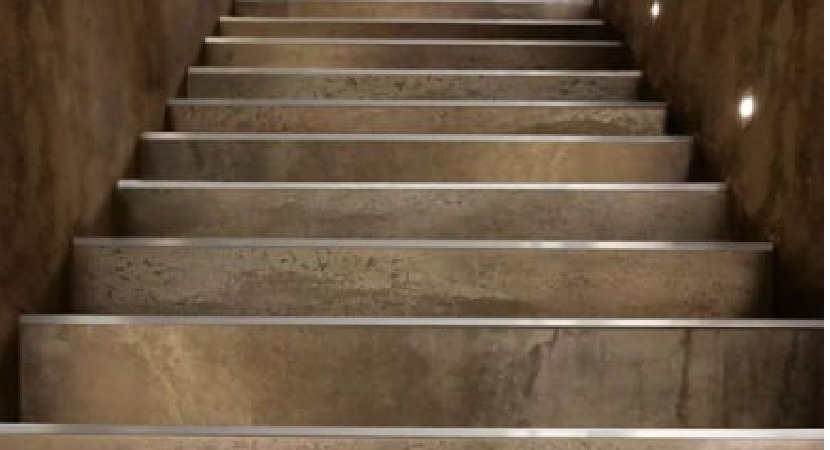
This article makes the case that anti slip stair nosing, tile stair nosing, and stair nosing strip systems should be acknowledged as crucial safety components integrated into the fundamental fabric of built environments rather than as optional extras.
Comprehending Stair Nosing: Beyond an Edge
The protruding edge of a stair tread that extends past the riser below is the fundamental definition of a stair nosing profile. This seemingly little projection has multiple uses:
→It increases the visible surface area of each step.
→It provides tactile feedback for users.
→It reinforces edge durability under wear and tear.
→It houses anti-slip features, particularly in high-traffic or wet environments.
Despite these purposes, stair nosing is still sometimes an afterthought, chosen more for aesthetic coherence or colour matching than for performance indicators.
The Anatomy of a Safety Failure
Falls on stairs are among the most common causes of non-fatal injuries worldwide. According to the World Health Organization, stair-related occurrences make for a significant fraction of the 37.3 million falls that require medical attention each year. The Centres for Disease Control and Prevention in the United States are one of many national health databases that regularly report thousands of hospital visits connected to stairs each year, despite the fact that complete worldwide statistics that accurately distinguish stair injuries vary.
Surprisingly, a significant portion of these events is directly related to wear-induced stair tread degradation, slick surfaces, or poor edge visibility. The role of stair edges becomes not only practical but also essentially human because staircases are ontological touchpoints that building occupants use daily.
Anti Slip Stair Nosing: Engineering Safety with Precision
One of the most exciting developments in stair safety is the advent of anti-slip stair nosing systems. High-friction materials like carbide inlays, abrasive tapes, or textured rubber are included into the nosing profile itself by these technologies. The end product is a stair edge that actively improves slip resistance in addition to resisting wear.
Performance Metrics & Industry Standards
Slip resistance coefficients are becoming more and more important in major building codes and standards organizations (such ISO 2424 and the International Building Code). The effectiveness of a stair nosing is frequently assessed using the following techniques:
Coefficient of Friction (COF)
A measure of traction; surfaces with higher COF values are less prone to slipping.
Abrasion Resistance
The ability to withstand surface wear without losing grip integrity.
Lighting Compatibility
High-contrast nosing profiles enhance visibility in low light.
Research suggests that well-designed anti-slip nosing can reduce stairway slip incidents by up to 60–70%, particularly in commercial contexts like transit hubs and healthcare facilities where foot traffic is dense and diverse.
Tile Stair Nosing: Harmonizing Safety and Design
The introduction of tile stair nosing systems revolutionized how designers approach stair aesthetics. Tile nosing integrates with ceramic or porcelain surfaces, ensuring continuity from tread to edge without exposing raw material cut edges.
Unlike metal or rubber nosings, tile stair nosing offers:
→Seamless visual integration.
→Customization to match a wide range of finishes.
→Compatibility with contemporary design trends prioritizing minimalism.
However, tile nosing alone may not meet aggressive slip-resistance requirements. Professional practice increasingly incorporates textured ceramic finishes or embedded inserts, marrying form and function.
Stair Nosing Strip: The Modular Intervention
Stair nosing strip products are modular components affixed to existing stairs to enhance safety without complete renovation. These strips are particularly valuable in retrofit scenarios:
→Historic buildings where original treads must be preserved.
→Rental properties seeking code compliance.
→Public spaces with evolving usage patterns.
These strips, which are made of composite polymers, PVC, or anodized aluminium, frequently have contrasting colour bands for visual guidance and anti-slip inserts. Because of its adaptability and affordability due to its modular design, stair safety enhancements are now accessible to people from all socioeconomic backgrounds.
Analytics at the Intersection of Design and Safety
Stair nosing considerations were among the lowest 20% of specified safety aspects in early design phases, according to a 2024 industry survey of commercial real estate developers. Nevertheless, buildings that subsequently implemented professional-grade stair nosing systems reported the following when retrofit results were examined:
→A 45% decrease in insurance claims for stairs.
→A 30–50% decrease in slip-and-fall incidents during the winter months.
→Increased occupant satisfaction levels in post-occupancy reviews.
These figures underscore not just the utilitarian benefits of quality nosing profiles, but also their ROI in facility management and human-centered design.
Aesthetic Resistance and the Future of Stair Nosing
Despite these benefits, resistance persists. Some designers view nosing profiles as “visual noise” or incompatible with minimalist aesthetics. Yet, the future of architectural safety demands a paradigm shift—one where edge treatments are celebrated rather than concealed, where anti-slip stair nosing is standard, not optional.
Emerging trends include:
→Photoluminescent nosing for egress lighting.
→Nosing for smart buildings with sensor integration.
→Environmentally friendly materials that combine high friction performance with recycled composites.
These advancements imply that stair nosing will someday transcend mere compliance to become an expressive element of thoughtful architecture.
Conclusion: Edge Matters
In the tango between safety and beauty, stair nosing profiles serve as silent sentinels that protect users, guide steps, and provide architectural purpose. Whether they are referred to as tile stair nosing, stair nosing strips, or advanced anti-slip stair nosing systems, these characteristics deserve our attention as important pieces of robust, compassionate structures rather than as optional extras. The significance of the exact moment we take each step—a moment characterised by faith in the material world beneath our feet—is diminished if stair nosing is ignored.



What do you think?
The cantilevered and stepped massing plays into the building’s sustainability benefits, as it forms balconies and green roofs that allow occupants fresh air and stunning views of the city.