
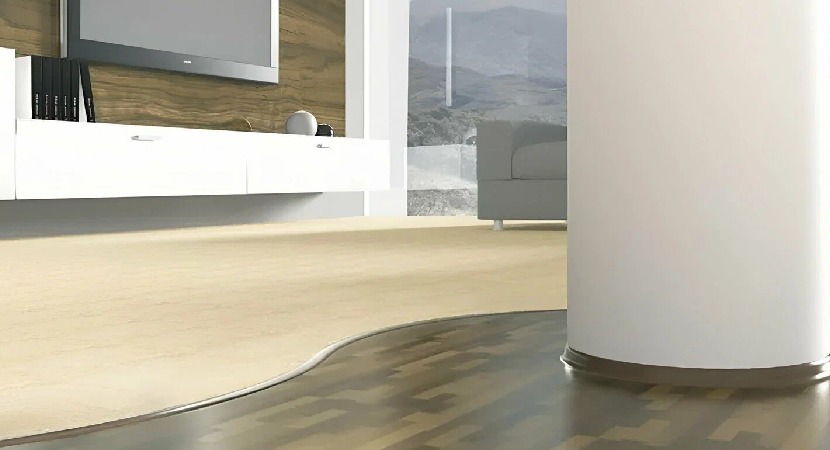
This article examines what floor trim profiles are, why they matter in both design and performance, and how they support best practices in complex tiling workflows. By combining industry insights with technical clarity, we’ll explore why these components should be specified early and treated as strategic — not incidental — elements of tiling design.
Defining Floor Trim Profiles: Beyond the Finishing Touch
At the most basic level, floor trim profiles are finishing pieces that transition between tiled surfaces and other materials, protect exposed tile edges, and provide visual continuity across a tiled installation. These profiles are available in a variety of shapes, including L-shapes, T-shapes, reducers, bullnose edges, corner trims, and threshold pieces, each of which is intended to satisfy certain practical and decorative needs.
Floor trim profiles are more than just decorative mouldings; they are engineered performance components. They manage differential movement between materials, bridge gaps, define distinct, clean perimeters, and protect delicate edges from impact in otherwise discontinuous flooring systems.
Functional Needs for Big Projects
In modest home installations, raw tile edges could be hidden behind baseboards or go unnoticed. On the other hand, large commercial projects like shopping centres, hospitals, airports, and college campuses need long-lasting finishes over thousands of square meters under regular use. In this case, floor trim profiles are essential:
-
Edge Protection in High-Traffic Zones
Ceramic, porcelain, and natural stone tiles can be rigid and brittle at their peripheral edges. Without proper protection, these edges are susceptible to chipping and cracking — especially under rolling loads from trolleys and cleaning equipment or impact from movable fixtures. Floor profile edge trim absorbs and distributes force at these critical edges, significantly reducing failure rates over time.
This performance benefit is not cosmetic: field data from commercial projects shows a marked reduction in localized tile renewal and maintenance costs when edge protection profiles are used proactively, rather than remedially.
-
Managing Transitions Between Materials
Large construction sites rarely use a single flooring type from entrance to exit. Tiles often meet hardwood, carpet, resin, or concrete. Trim profiles — particularly aluminium or anodised options — create level, trip-free transitions that comply with accessibility standards while maintaining continuity of design.
For example, an aluminium floor profile edge trim can connect porcelain tiling to adjacent materials without creating abrupt elevation changes — a key requirement in public-use buildings where safety and slip resistance are regulated by building codes.
-
Accommodating Differential Expansion
Tiles and substrate materials expand and contract at different rates, especially in large floor areas subject to thermal variation. Trim profiles, such as T-shaped transition pieces and expansion joint profiles, allow controlled movement while preventing stress cracking. This structural role minimizes costly repairs and premature failures across expansive floors.
Materials Matter: Aluminium and Beyond
The choice of material for floor trim profiles is as significant as the selected profile shape:
Aluminium Floor Trim Profiles
Aluminium is perfect for big institutional and commercial applications since it is strong, lightweight, corrosion-resistant, and aesthetically neutral. Anodized or powder-coated finishes enhance durability in high-traffic areas and go well with contemporary interior design.
Stainless steel
In high-impact or hygienic areas like labs and hospitals, stainless steel profiles give improved durability and ease of cleaning.
Brass and aesthetic Alloys
Brass and distinctive metallic coatings enhance the look of upscale retail or hospitality fixtures without compromising utility.Traffic needs, maintenance requirements, and architectural intent should all be considered when selecting the appropriate material and finish.
Combining Aesthetics and Design
In addition to its defensive and structural functions, floor trim profiles enhance visual coherence. They help designers create the desired spatial narratives by defining borders and framing tiling patterns. Profiles can be used to create contrast or continuity — framing tile fields like picture frames, or gently bridging disparate material palettes.
In large format layouts, well-specified trims reduce visual “edge noise” and provide a controlled perimeter that enhances perception of alignment and geometric regularity — an aesthetic that resonates in corporate and institutional spaces.
Installation Efficiency and Lifecycle Benefits
Efficient installation is a tangible advantage of professionally specified floor trim profiles. Pre-engineered profiles act as mechanical guides and straight edges during tile placement, reducing alignment errors and labor time — a considerable benefit on large projects with tight timelines.
Purchasing high-quality trim profiles up front, particularly those made of aluminium, is associated with a lower total cost of ownership over the course of a lifetime. By lowering edge damage and transition failures, these designs extend the lifespan of flooring overall and lessen the need for mid-life repairs and localized replacement.
Final Thoughts: Significant, Not Incidental
In large-scale tiling projects, floor trim profiles are essential structural and cosmetic elements rather than optional extras. Floor profile edge trims, especially aluminium floor trim profiles, provide quantifiable advantages in commercial and institutional buildings by improving durability and safety, facilitating smooth transitions, and improving long-term performance. For architects, specifiers, and flooring experts, prioritising the right profile products early in project planning reduces risk, improves finish quality, and ensures that tiled surfaces function as intended for years to come.


What do you think?
The cantilevered and stepped massing plays into the building’s sustainability benefits, as it forms balconies and green roofs that allow occupants fresh air and stunning views of the city.