
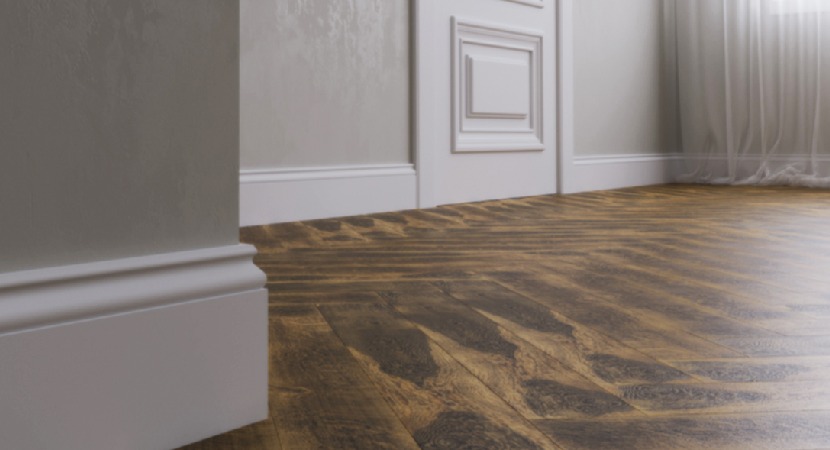
In commercial architecture, design decisions are rarely cosmetic. Even seemingly insignificant details like skirting have an impact on cost control, durability, hygiene, and spatial perception. Using performance measures, lifecycle analytics, and industry statistics, this paper evaluates the practical effects of tile skirting versus conventional skirting systems in commercial settings. By reframing skirting as a strategic design and operational choice rather than a final afterthought, the comparison questions established norms.
Skirting is Not A Decorative Afterthought But Rather An Operational Interface
Skirting represents the connection between horizontal and vertical planes, a contact subjected to constant mechanical stress, dampness, cleaning agents, and optical examination. This interface is vulnerable to the following in commercial projects:
→Foot traffic, cleaning supplies, and trolleys’ repeated effects
→Strict maintenance schedules
→High expectations of visual uniformity across huge floor areas
Despite this, skirting is often value-engineered late in the project lifecycle, frequently defaulting to traditional profiles without performance benchmarking. This is where tile skirting disrupts convention.
Traditional Skirting Systems: Familiar, Flexible, but Fragile
Traditional skirting boards—typically MDF, timber, PVC, or composite materials remain prevalent in commercial interiors due to familiarity and installation speed.
Performance Characteristics
From a procurement perspective, traditional skirting performs well on three fronts:
- Lower initial material cost, particularly for MDF and PVC
- Wide availability, making it easy to buy skirting board online with short lead times
- Design adaptability, allowing for ornate or minimalist profiles
However, performance data paints a more complex picture. Industry maintenance studies indicate that wood-based skirting in high-traffic commercial spaces shows visible degradation within 24–36 months, particularly at corners, joints, and service corridors. Moisture ingress and micro-impact damage remain the primary failure modes.
Over a 10–15 year commercial lifecycle, repainting, repairs, and partial replacements can add 25–40% to the original installation cost and are often-overlooked operational expenses.
Tile Skirting: Material Continuity as a Performance Strategy
Tile skirting, where flooring tiles are extended vertically to form the skirting line, represents a fundamentally different approach. Rather than introducing a secondary material, it leverages continuity.
Material Performance Metrics
Ceramic and porcelain tiles used in skirting applications demonstrate:
→Water absorption rates below 0.5% (porcelain-grade tiles)
→High chemical resistance to industrial cleaning agents
→Superior abrasion and impact resistance
In commercial environments such as hospitals, retail malls, and hospitality back-of-house zones, these properties directly translate to lower failure rates. Facility management data suggests tile skirting reduces skirting-related maintenance interventions by up to 40–50% over a 15-year span.
Aesthetics Meets Spatial Psychology
Beyond durability, tile skirting alters spatial perception. Continuous material flow from floor to wall creates:
→Stronger visual alignment
→Perceived increases in floor area
→Cleaner architectural lines
This is especially helpful in business and retail spaces, where visual clutter detracts from brand messaging. In order to strengthen spatial coherence, large-format tile skirting that is in line with floor grout lines is becoming more and more common in high-end commercial projects.
In contrast, traditional skirting creates a visual break that is beneficial in home settings but frequently detrimental in large commercial design.
Installation Economics: Short-Term vs Long-Term Logic
A common objection to tile skirting is installation complexity. Tile skirting indeed requires:
→Skilled tilers
→Precise alignment
→Longer installation windows
Compared to standard skirting installation, this can result in a 15–25% increase in labour costs up front. On the other hand, marginal cost increases are greatly minimised when installation is synchronised with floor tiling.
By the fifth year of operation, tile skirting often beats conventional options in terms of total cost of ownership, especially in high-traffic areas.
Trends in Procurement and Digital Supply Chains
The option to purchase skirting boards online has changed how people make purchases. Online marketplaces are dominated by traditional skirting because of shipping efficiency and standardisation. However, pre-cut, rectified, and color-matched tile skirting systems made especially for commercial usage are becoming more and more available from manufacturers.
This evolution signals a broader industry shift: skirting is no longer an accessory, but a systemized architectural component.
Comparative Summary for Commercial Projects
| Evaluation Factor | Tile Skirting | Traditional Skirting |
|---|---|---|
| Lifecycle Cost | Low | Medium-High |
| Moisture Resistance | Excellent | Variable |
| Maintenance Demand | Minimal | Frequent |
| Visual Integration | High | Moderate |
| Installation Speed | Moderate | Fast |
Conclusion: Choosing Performance Over Habit
Operational reasoning, not habit, should be the basis for choosing between tile and conventional skirting. For low-impact, design-driven areas with little exposure to damp or frequent use, traditional skirting is still appropriate. However, tile skirting is more in line with the realities of contemporary commercial settings, where lifecycle efficiency, durability, and hygiene are just as important as aesthetics. Skirting is no longer merely a finishing touch in a time of data-driven design and value-based construction. It’s a performance boundary, and the location of that barrier is becoming more and more defined by tile skirting.


What do you think?
The cantilevered and stepped massing plays into the building’s sustainability benefits, as it forms balconies and green roofs that allow occupants fresh air and stunning views of the city.